

When my doctor sent me the message that my three month A1C was up again, I sat in my car in the grocery store parking lot for a solid ten minutes before I could get out. I am 61, I work full time, and I have been managing type 2 for close to a decade. This is not my first brush with the numbers slipping. I have tried the all or nothing diet, the willpower approach, and more than a few bottles that promised a great deal on the label and delivered very little in the bloodwork. What has actually kept me steady is the boring stuff, done daily, not the dramatic stuff done once.
Before I say anything about supplements, let me be plain about the ground rules I now treat as non-negotiable. No single thing fixes insulin resistance on its own, and anyone who tells you otherwise is trying to sell you something. My plan rests on three legs: how I eat, how much I move, and one natural herbal remedy I take beside my doctor's advice, never instead of it. This article is not medical advice. It is what I do, and it assumes you have had an honest conversation with your own doctor first.
The herbal support I take beside my doctor's guidance
The one supplement that earned its place in my daily routine is berberine, and I take the NOW Foods version combined with MCT oil because the fat helps my body absorb it better. It is a support tool, not a cure, and I would never suggest it replaces what your doctor has prescribed.
Amazon Check Today's Price on Amazon →Step 1: Get a real baseline before you change anything
You cannot tell if something is working if you do not know where you started. So step one is not a supplement and it is not a meal plan. It is a printed set of numbers. Ask your doctor for your last fasting glucose reading and your A1C, and write both down in a notebook or on your phone. If you test at home, take a reading at the same time each morning, before food, for about a week. That gives you a range, not a single lucky number.
This baseline is what stops you from guessing. A lot of us fall into the trap of picking a routine, sticking with it for two weeks, and getting discouraged because nothing feels different overnight. But your body does not move on feelings. It moves on numbers, and you will be glad you have them in two months when you sit down with your doctor to review where you are.
One more thing in step one, and it is the most important sentence in this whole article: tell your doctor what you are planning before you start. If you are on medication for your blood sugar already, and plenty of us are, do not add anything, herbal or otherwise, without a conversation first. Your doctor can tell you what might interact and what simply is not worth your money.
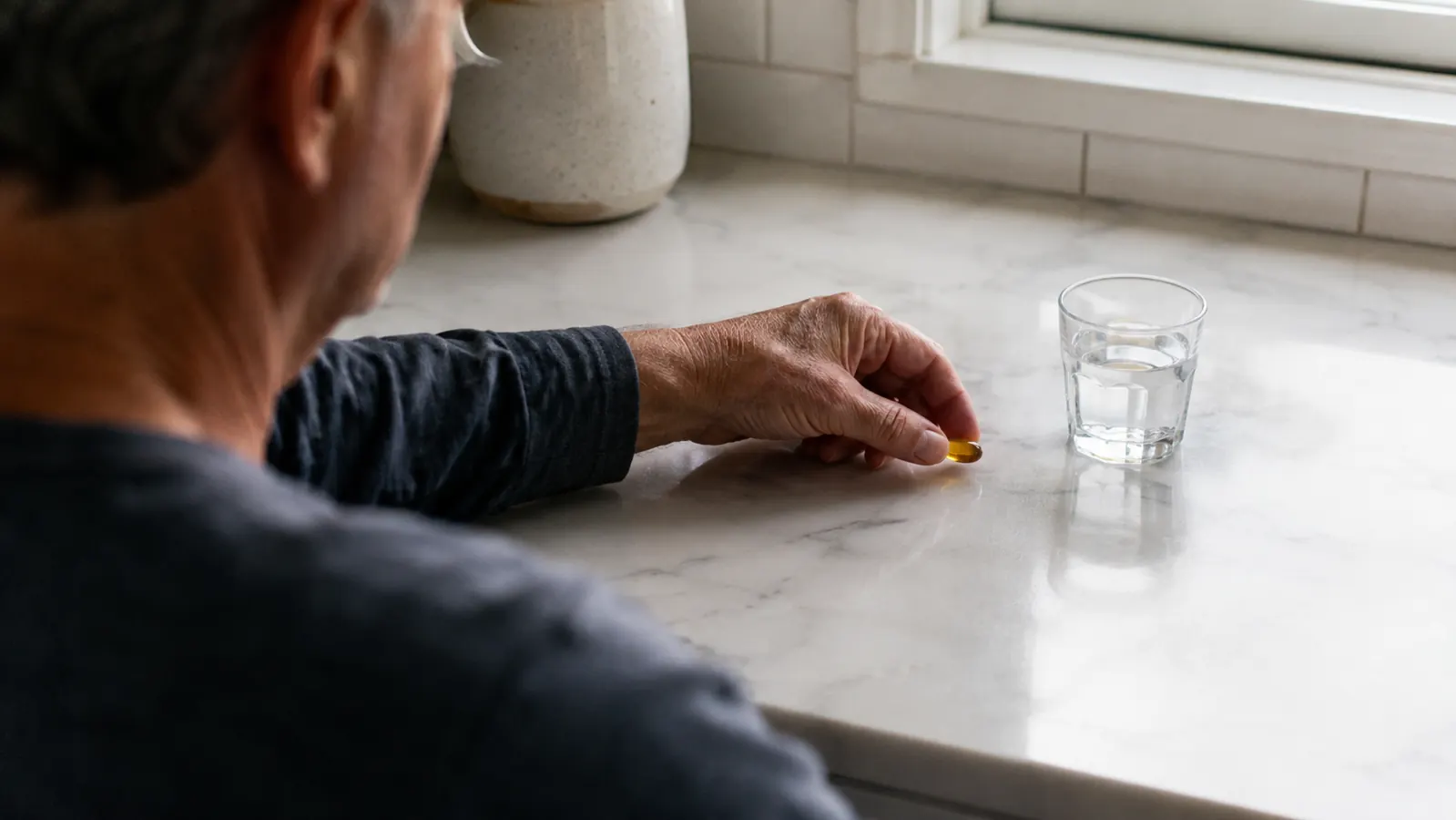
Step 2: Rebuild every plate around protein, fiber, and a bit of fat
The single biggest change that helped my numbers was not cutting everything out. It was changing the order of what is on my plate. I stopped building meals around carbs and started building them around protein, fiber, and healthy fat. Half the plate becomes non starchy vegetables, greens, broccoli, peppers, or cauliflower. A palm size portion of protein follows, chicken, fish, eggs, or beans. Then a modest serving of whole grains or a small piece of fruit finishes the plate.
The reason this works for people like us is that protein and fiber slow down how fast sugar gets into your bloodstream. A stabler release means a smaller spike, and after years of watching my own readings, I can tell you those smaller spikes are what add up. You are not giving up food. You are just making the plate do some of the work for you, so your body is not asking for a rescue every couple of hours.
I also learned to put the fork down between bites and to drink a glass of water with meals. It sounds too simple to matter, but slowing down is part of the same idea: you are telling your body it does not need to dump a load of energy into your system all at once. This is the eating half of the plan, and it is where I spent most of my effort.
Step 3: Take a ten minute walk after you finish a meal
Movement is the second leg of the plan, and my rule for myself is small and specific: ten minutes of walking after a meal. Not an hour at the gym, not a punishing evening workout. Ten minutes, at a comfortable pace, usually right after I clear the table. My doctor explained it to me in plain words: your muscles use up some of that sugar you just ate, and a short walk helps your body put it away instead of leaving it floating around.
If you work a full time job like mine, ten minutes feels impossible during the week. So I split it. I walk the office parking lot after my lunch break. I take the stairs instead of the elevator. On the weekend, that ten minutes turns into a slightly longer walk, and I use it to think. The exact number of minutes matters less than the habit, and the habit is simply that I move a little a few times a day.
I am not going to pretend the walking replaced anything dramatic, but when I look back at the months where my numbers improved, they are the months where I kept the walks going. Consistent, small, and boring beats impressive and rare. That is the whole secret, and it is not really a secret at all.

Step 4: Add berberine as a daily support tool, beside your doctor's advice
Now for the herbal part, because I promised you a supplement and I am not going to bury the lede. The natural remedy that earned a permanent place in my routine is berberine, a compound found in several plants that people have used for a long time. It is the supplement I researched the hardest before I tried it, because I was tired of spending money on things that did nothing. I take the NOW Foods berberine, and part of the reason is how it is made.
The version I settled on combines berberine with MCT oil, and the reason that matters is absorption. Berberine on its own does not absorb especially well, which means a lot of what you take can pass right through you. Pairing it with a healthy fat like MCT oil is meant to help your body actually use what is in the capsule. That made sense to me, so I went with it. I have been taking it daily for a while now, always with food and always alongside what my doctor recommends.
Here is the honest part and the boundary I stay inside. Berberine is a support tool, not a cure, and it is not a stand in for your medication. Nothing I have read, and nothing I have experienced, tells me it replaces the real work of eating well and moving daily. What it has done for me is add a steady support on top of that work. If you are curious, ask your doctor about it, and if your doctor is on board, that is the green light. This supplement is one piece of a plan, and the plan is what matters.
Step 5: Write down what actually happened, not what you hoped
The last step is the one most people skip, and it is the one that separates a habit from wishful thinking. Track it. I keep a simple notebook on my kitchen counter, and every morning I write the date, my fasting reading if I took one, what I ate the day before, and whether I walked. It takes ninety seconds. The point is not to obsess. The point is to have a record you can look at honestly after a few weeks.
When you review that notebook, you will see patterns you would have missed entirely. I noticed my worst mornings always followed late, carb heavy dinners. My best mornings followed early dinners and a walk. I could not have seen that without writing it down, and I certainly would not have remembered it. The notebook turns a vague feeling of trying hard into something you can actually read.
Give the plan a real six to eight weeks before you judge it. That is long enough for your body to catch up and long enough for you to build the routine past the point where you have to think about it. Then take the notebook to your next doctor visit and go through it together. Adjust with your doctor's input, not on a guess.
What Else Helps
Once I had the food, the walking, and the berberine in place, I found two more things made the whole plan easier to keep. Sleep is the first. A poor night raises my morning reading more than any dessert ever did, and it also makes it much harder to say no to the wrong things the next day. I stopped treating early bedtimes as boring and started treating them as part of the same routine. Your body does a lot of its repair work while you are asleep.
The second is stress, which is harder to schedule than rest. I do not have a grand plan for stress, but I do give myself a ten minute quiet stretch of the day that belongs to nobody else, no phone, no news, no to do list. I found that staying calm is its own kind of daily habit, and it protects everything else I am doing. None of this is dramatic, and that is exactly the point.
I want to be blunt that berberine, even the well made NOW Foods version I take, is not something I would rely on alone. It works as part of a daily rhythm: the plate, the walk, the sleep, the steady support supplement, and the honest notebook. Take away the rhythm and the supplement cannot carry it. Keep the rhythm and the supplement has a real job to do.
The months where my numbers improved are the same months where I kept the walks going, kept the plate half greens, and took my berberine every day with food.
The support tool I tested and kept
If your doctor gives the go ahead for berberine, the version I take daily is the NOW Foods berberine with MCT oil for better absorption. It is one steady piece of a larger routine, not a shortcut, and it worked best for me when everything else was in place.
Amazon Check Today's Price on Amazon →